What Happens When an Italian Religious Fanatic Marries a French Libertine

It's been a while, hasn't it? But luckily I've made it to the other side of a pretty bad year, so you'll be hearing more from me...hopefully.
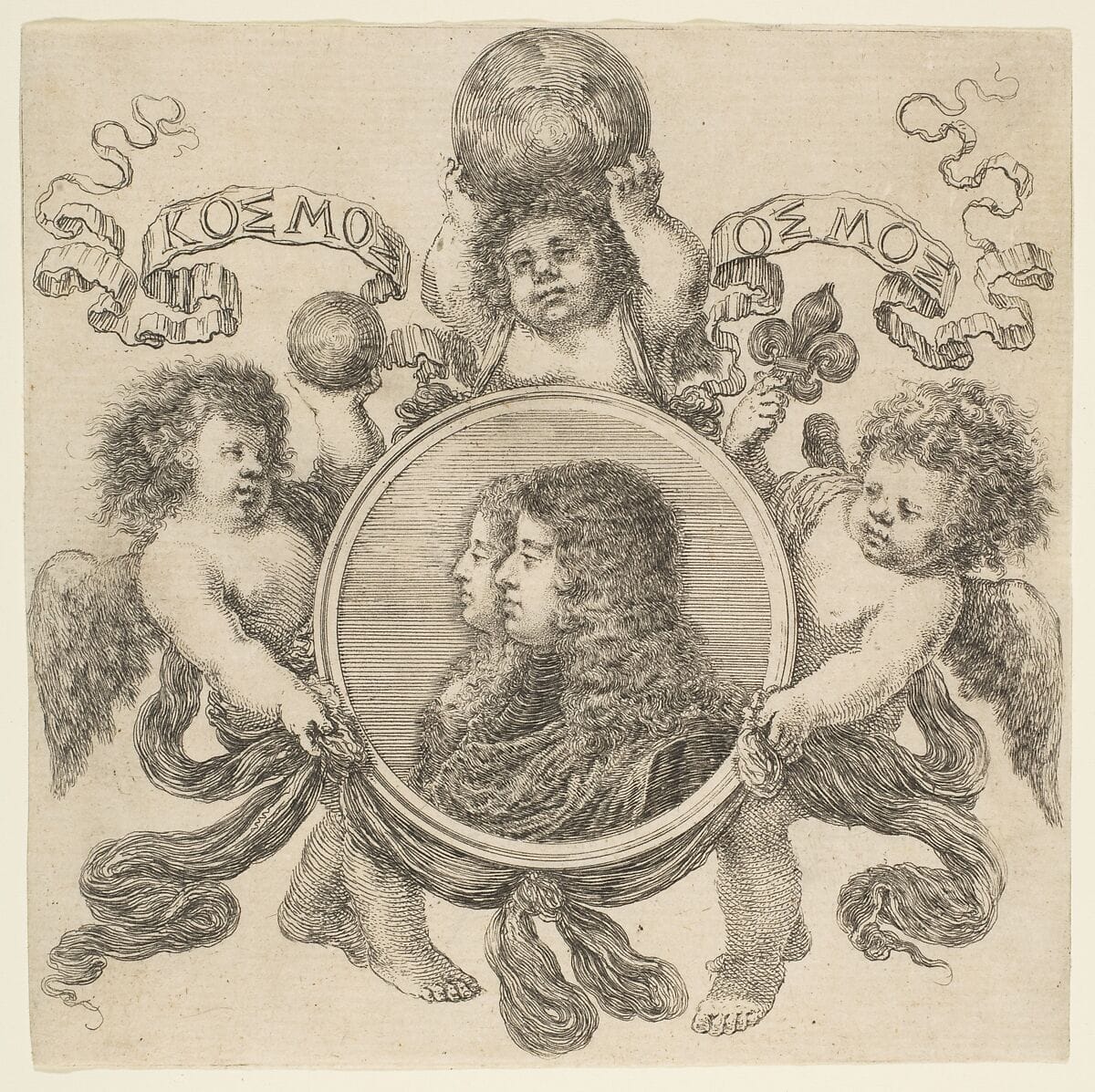
If I had millions of dollars and Hollywood connections, the one story from history I would try to bring to screens would be the story of the apocalyptically awful marriage between a French princess, Marguerite-Louise d'Orléans, and the Grand Duke of Tuscany, Cosimo III. It's a tale that tends to get overlooked, at least in the English-speaking world. I can understand why, given that the attitude toward Italian history here tends to gloss over everything between the Renaissance and the unification of Italy in the 19th century. Even so, this is one of the great dysfunctional marriage stories in all of history. I've always been fascinated by the intersection of the political and the personal for those in power, and the marriage of Cosimo and Marguerite is an example why.
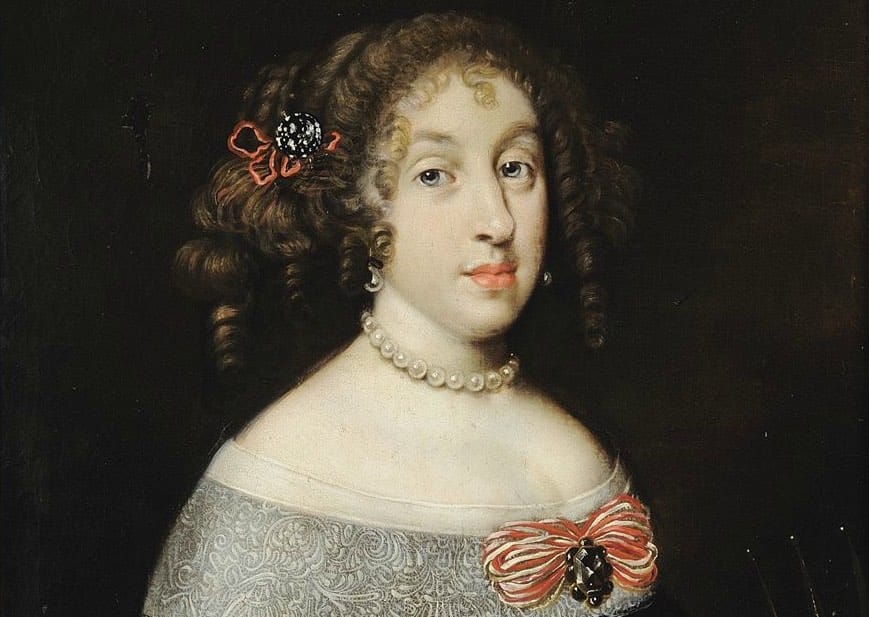
From the time she was a small child, Marguerite-Louise d'Orléans was told that her destiny was to marry her cousin King Louis XIV and become Queen of France. She certainly had the right pedigree. Marguerite-Louise was the daughter of Louis XIV's uncle, Gaston, Duke of Orléans while her mother, also named Marguerite, hailed from the House of Lorraine, a noble dynasty that proudly (and almost certainly falsely) claimed direct descent from the medieval conqueror Charlemagne himself. So Marguerite-Louise was given an education fit for the queen of what was then Europe's preeminent power and cultural leader, in everything from dances and music to Latin and German.
She was not just shaped by her aristocratic education, but also a culture that gave women, or at least upper-class women, more dignity and cultural influence, even if it didn't translate into what we'd consider a rights movement today. Inspired by Descartes' philosophy especially his separation of the mind and body, writers like François Poullain de la Barre and Mary Astell took the further step of concluding that gender itself was wholly in the mind. Men may be stronger physically, but the subordination of women was not a result of anything innate to women's or men's embodied natures. Instead, it was a product of culture and education, and as such, it could be changed. It reveals how widespread these ideas were at least among the upper classes that Marguerite-Louise's own older half-sister, Anne-Marie-Louise, the Duchess of Montpensier, wrote letters to a friend envisioning a rural utopia where women were not bound by marriage and had the freedom to learn, create art, or play music as much as they liked. Nor did Anne-Marie-Louise fail to live out her own ideals. Once, she led a group of armed men during the Fronde revolt against the monarchy. Later, she further scandalized the French elite and enraged Louis XIV by refusing to marry the mentally unstable King of Portugal. Instead, she tried to marry a man she fell in love with, regardless of his rank, although it ended in her exile and being forcibly separated from her lover.
Nor was Anne-Marie-Louise completely an outlier, as dramatic as her life was. By the late seventeenth century French women from the aristocracy and the upper bourgeoisie became known from Portugal to Russia for their independence and exceptional intelligence. The reasons for this are debatable, but at least it certainly wasn't a coincidence this idea became widespread along with the idea that gender existed mainly in the mind, not the body. The Spanish scholar and monk Benito Feijóo praised French women as models of civility and living proof of the value of women's education. On a less respectable note, in England, Lord Chesterfield bluntly advised his son on his trip to Paris that he could take a French noblewoman as a lover because they were free to take lovers and such a relationship could benefit any young man of class. French noblewomen hosted salons in their own homes where the cultural and intellectual celebrities and were known for living separate lives from their husband with their lovers once they fulfilled their obligation and had a couple of legitimate heirs. In the age of the Enlightenment, French upper-class women were simultaneously both paragons of respectability and agents of decadence.
Marguerite-Louise was born into a society where women of privilege had more social leeway to assert their independence than their mothers and grandmothers. Yet, they still had very few legal rights, were routinely forced into marriages arranged for financial and social reasons, and if they stepped too far out of line they could become pariahs at best or imprisoned for life in a convent at worst.
How much of this Marguerite-Louise gleamed we can't know. However, she must have known that her destiny was thwarted. A war between France and Spain ended with a peace treaty that called for Louis XIV to marry a Spanish princess, Maria Theresa. That left Marguerite-Louise's future uncertain apart from the fact that she was, like so many royal women, condemned to become a bargaining chip in international diplomacy. It was decided that she would marry the son of one of Louis XIV's allies, Cosimo, the future Grand Duke of Tuscany.
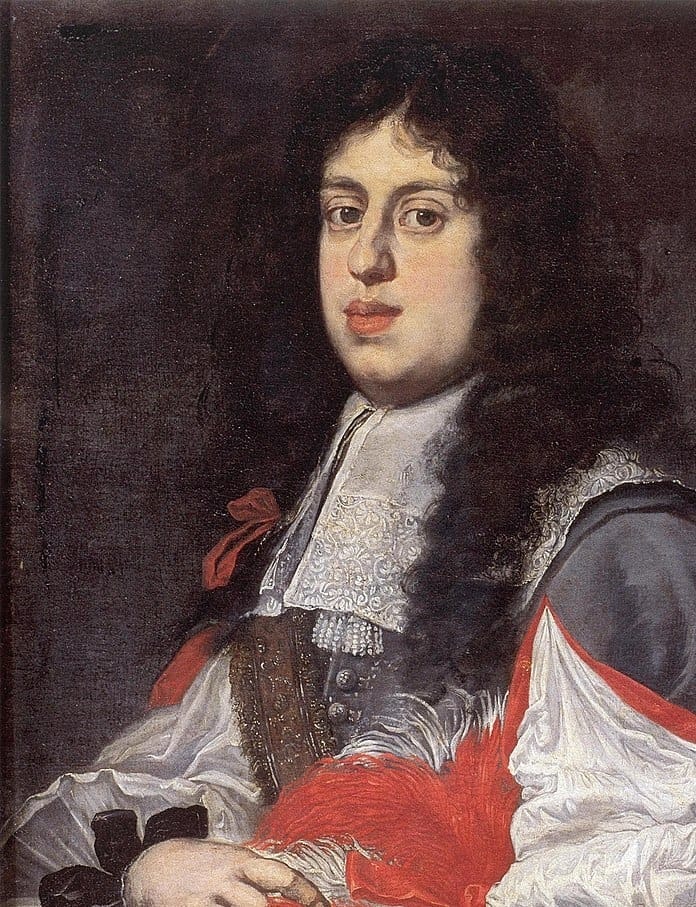
The Medici had the quintessential rags to riches to thrones story. They started out as just one of several wealthy banking families in Florence at a time when northern Italy was the most urbanized and richest region in Europe besides the Netherlands. Through a combination of sly maneuvering, playing the system, luck, and the incompetence of their enemies, they became the unofficial heads of the Republic of Florence. They survived coup d'etats and being exiled from Florence not once, but three times, outlasting several other Italian upstart families like the Sforzas of Milan and the Borgias of Rome. When Emperor Charles V of Austria and the Holy Roman Empire wanted to bring stability to the region after a series of long, devastating wars over Italy with France, the Medici's power was finally formalized when a member of the family was installed as Cosimo I, Duke of Florence and, later, Grand Duke of Tuscany (not to be confused with Cosimo, the protagonist or antagonist of our story today). The new Tuscan state would never be in a position to challenge the hegemony of power players like the Hapsburgs of Austria, but the Grand Dukes did manage to build a prosperous state that had a surprisingly modern and well-functioning civil service.
By the late seventeenth century when Marguerite-Louise and Cosimo's marriage was to take place, all this was a distant memory. Once Italy was the beating heart of the international economy, but now the colonization of the Americas meant the center of European trade had shifted away from the Mediterranean to the Atlantic Ocean. Tuscany's once vibrant clothing industry was a shell of what it once was and the once influential Florentine banks that the monarchs of Europe depended on had long since lost out to rivals in northern Europe. To top it off, in 1629 northern Italy was hit by the worst outbreak of the plague since the Black Death itself, claiming the lives of as much as two-thirds of the population in some areas. In the fifteenth century, the city of Florence alone had a population of over 80,000 souls. By Cosimo's time after the plague pandemic, the entire territory of the Grand Duchy of Tuscany, which encompassed not just Florence but also the urban centers of Pisa, Siena, and Livorno, had a combined population of just 70,000. Tourists who visited these cities remarked on seeing long-abandoned buildings and city streets partially reclaimed by nature.
Little of this could be blamed on Cosimo's father, Grand Duke Ferdinando II. He never attempted any broad reforms that might have improved Tuscany's situation. Still, he was the rare sort of leader who saw looking after the not-rich people in his country as a core part of the job, risking his own life to supervise public health efforts on the ground as the plague raged and instituting poverty relief policies that did not involve corralling the poor into hellish workshops. He was also conscious of the Medici's legacy of cultivating and supporting art and knowledge, channeling Tuscany's increasingly limited resources toward that end and attempting to defend (albeit unsuccessfully) the pioneering astronomer and his father's former teacher Galileo Galilei when the Catholic Church turned on him.
Ferdinando also had a complicated personal life. If he were alive today, he'd probably identify as gay or possibly bisexual, which complicated his marriage to Vittoria della Rovere, an heiress from an old Italian dynasty and who had a personal reactionary bent. Reportedly, Vittoria was horrified when one time she walked in on her husband in flagrante delicto with a man and refused to even live in the same residence as him for many years until, for unclear reasons, they finally reconciled or at least came to an amicable agreement. The fact that there is a mysterious gap of 18 years between Cosimo's birth and that of Vittoria and Ferdinando's other child, Francesco Maria, gives weight to this report, although it could also be explained as Ferdinando feeling he had done his dynastic duty by fathering a male heir and changing his mind much later. Nor did Ferdinando put much effort into keeping his private life under wraps. According to one eighteenth-century account, the Vita di Ferdinando II, Ferdinando was awoken in the middle of the night by one of his attendants, who complained that two of the court pages were kissing and fondling each other and they laughed at his orders to stop. Taking a lit candle, Ferdinando followed the attendant to the scene of the crime. Understandably, the two pages were terrified especially since sodomy was a crime that could be punished with imprisonment, but instead Ferdinando handed the attendant his candle and joined in the makeout session while the attendant was made to stand there. When Ferdinando returned to his chambers, he told the no doubt mortified attendant to alert him if he ever saw such shenanigans then, so he could "punish" the perpetrators the exact same way. The source is not entirely reliable, at least in this part, but such a story does have enough eyewitnesses who would have likely happily shared the details with others. (In any case, I just really want it to be true.)
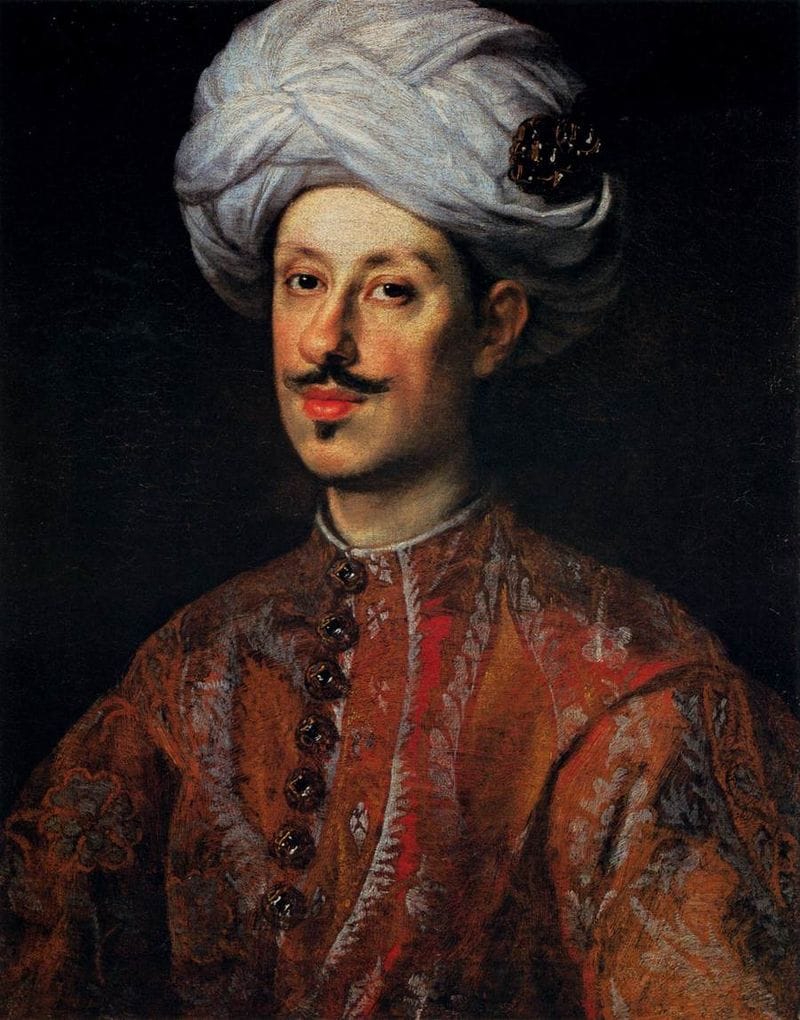
With a conservative mother who insisted on her son receiving a traditional religious education and a father who was a known sodomite, it's not surprising that Cosimo himself would grow up to be pious, exceptionally so even by the standards of the age, and hostile to most of the things his father supported. Even so, the records suggest that Cosimo showed signs of being a fairly typical Medici prince in his early years until he suffered a hunting accident and fell off his horse. Perhaps this early brush with his own mortality traumatized him. Whatever the reason, Cosimo became more insular and more devout, to the point that observers frequently remarked on it. He gave up hunting, finding he could no longer bear the sight of animals suffering, which was unusual for a royal at the time. Also, he spent his time with priests and monks, rather than boys his own age, and was only interested in art, music, and literature that was explicitly religious. These tendencies were so pronounced that Ferdinando feared what kind of future Tuscany would have with his son at the helm. It may have been a reason, or even the reason, he had another child with Vittoria.
It was hoped that marrying Cosimo off to loosen up. Of course, since this was a royal marriage, the personal was only secondary, at best. Tuscany's standing in the eyes of the world had declined along with its economy, to the point that Tuscany had arguably become almost a protectorate of Austria. To project an image of an independent Tuscany without having to go to war, there was no better way than to marry the heir to the Tuscan throne to a woman representing Austria's traditional enemy, France. Also, Louis XIV, the most aggressively expansionist king of France in a century, welcomed an opportunity to expand French influence in Italy. And, even better, the bride and groom were actually close in age! Royal marriages had a simple checklist: did the marriage serve a foreign policy objective, and would the union likely produce heirs to perpetuate the dynasty and preserve the country's future independence? From the Medici point of view, the marriage did indeed fulfill both requirements.
Too bad Marguerite Louise was Marguerite Louise, and Cosimo was Cosimo.
There were warnings on the horizon. Marguerite Louise's mother was indignant that her daughter would marry a mere grand duke and the descendant of bankers. She deliberately tried to sabotage marriage negotiations by encouraging her daughter's love affair with the handsome and dashing Charles of Lorraine, her cousin (look, if you were a French aristocrat you didn't have a lot of options). French diplomats assured the Medici that Marguerite Louise's relationship with Charles of Lorraine was a harmless infatuation. These ambassadors also worked hard to assure the Tuscan court that Marguerite-Louise was a pleasant and docile young woman, despite the occasional rumor that seemed to suggest otherwise.
Marguerite Louise tried to delay her journey once the couple were married by proxy, as was customary. When she finally left for Tuscany, she set sail from Marseilles, where she tearfully said goodbye to her paramour in plain view of a number of dignitaries. Arriving in the port city of Livorno, Marguerite-Louise was greeted by Cosimo's aunt, Duchess Margarita of Parma. As she stepped off the ship, Marguerite-Louise refused to give her new in-law her hand. Since Margarita of Parma wasn't of royal birth, she wouldn't have the privilege of formally welcoming a princess of France.
The Medici's impressions of Marguerite would only get worse from there. She complained about the food, the weather, and the fashions, comparing them all unfavorably to their French counterparts. As soon as she was settled in Florence, she demanded access to all of the Medici jewels. She was even caught trying to sneak some of the crown jewels out of Florence and send them back to her relatives in France. A Venetian ambassador cattily reported back that Marguerite "says she has married beneath her, which offends the sensitivities of [the Medici] and she cares nothing for the discomfort of her father-in-law, who wishes her to lead a quieter life, nor for the anger of her husband.”
It is probably no surprise that Cosimo was mortified by his wife's behavior. Nor did his uptight behavior loosen with marriage, despite his father's hopes. When Cosimo heard a rumor that the Duke of Mantua died in the middle of having sex, he decided he would only have marital relations with his new wife once a week and always under the supervision of a doctor.
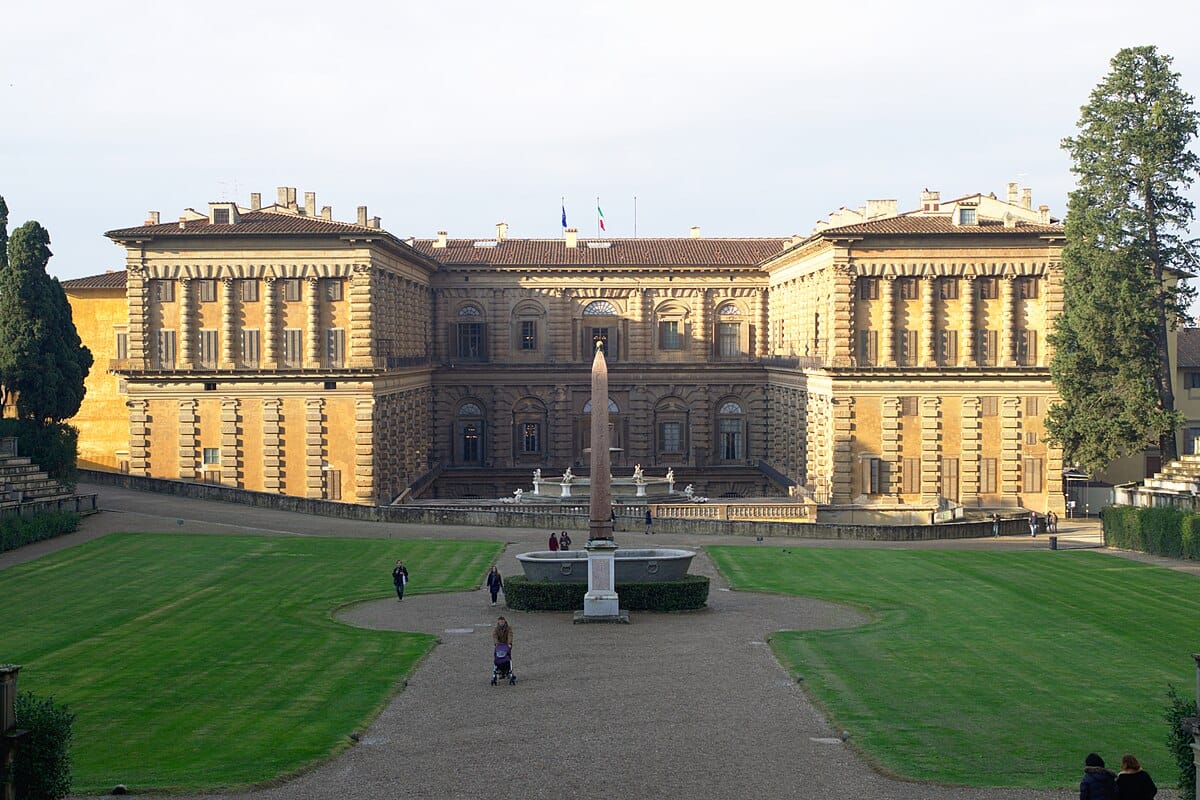
On top of her dislike for her new family and country, Marguerite-Louise held ballets which she participated in herself. She also earned her husband's disapproval by her hobby of taking long hikes and picnics in the country. Sometimes, later when she would end up basically banished to the countryside, she would even host dance competitions for rural peasants. Curiously, despite the snobbery she showed toward her own family, the people of Tuscany loved her for showing the common touch and making herself known even to people outside Florence, since upper-class women in Tuscany usually only left their villas and palaces to attend Mass.
Despite her husband's fear of the medical consequences of sex, by 1663 Marguerite-Louise gave birth to an heir, a boy named Ferdinando after his grandfather. As far as Marguerite-Louise was concerned, she had done her job as a grand duchess, and she should be allowed to return to France. She wrote incessantly to Louis XIV, begging him to let her come home. Since this jeopardized losing Tuscany to Austrian influence and, worse, would have meant admitting to a mistake, Louis XIV staunchly refused, even threatening to have Marguerite-Louise imprisoned if she ever crossed the French border. Still, the attitude at the French court was largely a sympathetic one. After all, everyone knew what these Italians were like. Indeed, Marguerite-Louise seems to have genuinely brought into the early modern stereotypies of Italians to the point she believed her in-laws wanted to poison her and would only eat meals prepared by her French cooks.
If any Medici had sympathy for her, it was her father-in-law, Ferdinando II. After all, he knew bad royal matches from personal experience. However, her behavior had become more rebellious. When Cosimo tried to resume his weekly visits to Marguerite-Louise's bedchamber, she threatened him with a wine bottle. Ferdinando had Marguerite-Louise placed under a house arrest of sorts at the Medici villa of Poggio a Caiano relatively far from Florence.
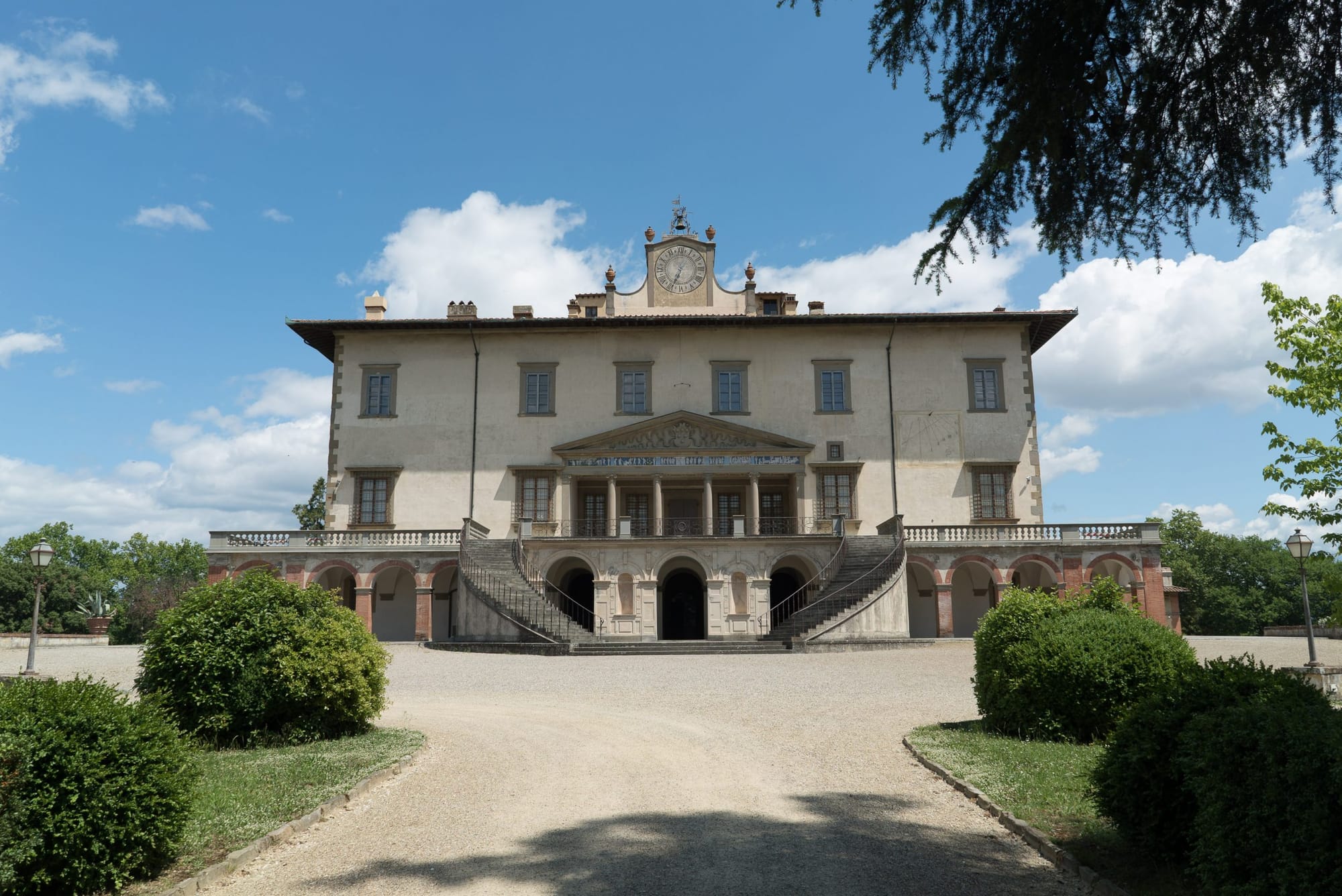
Ferdinando II also sent home the last of her French servants and asked Louis XIV and the Pope to send theologians, bishops, French ambassadors, and even Marguerite-Louise’s childhood nurse to lecture her on the proper duties of a wife. Her movements and correspondence were monitored, since it was found she was still receiving love poems from Charles of Lorraine and it was feared she would make a break for the French border.
Either tired of her virtual imprisonment or relenting to the team of nags who all urged her to play the part of the obedient wife, Marguerite-Louise began to allow Cosimo back to her bed. Once again, she was pregnant. This time, she went on hunger strikes and took long hikes and horseriding jaunts, all designed to induce a miscarriage. Despite her best efforts, in 1667, Marguerite-Louise gave birth to a daughter, Anna Maria Luisa. Once again, after the birth, Marguerite-Louise went back to refusing to even stay in the same building as her husband.
"Grand tours", where young men from the aristocracy and the wealthy bourgeoisie would complete their education by traveling around Europe, were becoming all the rage at the time. So Ferdinando hoped that his son's personality and thus his marriage would improve if he traveled abroad. Twice, Cosimo took his own grand tours. Surprisingly, he did enjoy himself, especially developing a love of England despite its Protestantism. The tactic seemed to work. At least, the two were able to tolerate each other enough that Marguerite-Louise would become pregnant a third time. However, whatever detente she worked out with her husband did not last, and with this pregnancy, she would again try unsuccessfully to cause the miscarriage of her third and last child, Gian Gastone.
Just a few months after Cosimo returned from his second Grand Tour, his father was dead and Cosimo was now the new Grand Duke. Cosimo did not hesitate to try to impose his religiosity on all of his new subjects. New laws were passed against gambling, kissing in public, parties with guests of both genders, and failing to kneel and pray when the church bells ran on Friday. He discarded his family's legacy of fostering knowledge and culture, only sponsoring religious art and writing. The universities of Tuscany were forbidden from teaching that the Earth revolved around the sun or any of the theories and writings of Galileo. More than that, Tuscan subjects were forbidden from attending university anywhere outside the country. Censorship became much stricter, driving away the artists, scholars, scientists, and writers that did not already leave Tuscany because of the lack of paying work. Nor did Cosimo help the dire economic situation he inherited from his father. He introduced new taxes, tariffs, and a corrupt and convoluted system of trade monopolies that were the fiscal equivalent of trying to get blood from a stone. Needless to say, Cosimo III quickly became unpopular.
The only thing worse than Cosimo's relationship with his subjects was his relationship with Marguerite-Louise. She convinced a French doctor to diagnose a benign tumor as something more serious and recommend that she go a hot spring in the French region of Burgundy, but Cosimo saw through the ploy and denied her permission. On a night that Cosimo was staying with Marguerite-Louise at Poggio a Caiano, she chased one of her cooks while he laughed and shouted, tickling him and hitting him about the head with a pillow. The commotion woke up Cosimo. Enraged, Cosimo sentenced the cook to work on the galleys, but he quickly pardoned him.
Marguerite-Louise was once again holed up in Poggio a Caiano. By this point, Cosimo had long since stopped visiting his wife, and the two only communicated through letters. Even then, Cosimo refused to grant her any kind of separation and was determined to keep her under lock and key while keeping up appearances. In one letter to her husband, Marguerite-Louise wrote:
So I have made a resolution which will not surprise you when you reflect on your base usage of me for nearly twelve years…I am the source of your unhappiness, as you are of mine. I beg you to consent to a separation to set my conscience and yours at rest.
The Grand Duke replied:
I do not know if your unhappiness could have exceeded mine. Although everybody else has done justice to the many signs of respect, consideration and love which I have never tired of showing you for nearly twelve years, you have regarded them with the utmost indifference.
Marguerite-Louise's response is oft-cited and one translation of it was even read by Minnie Driver for Letters Live:
You are harming your own children as well as me and yourself, because you are driving me into such a state of despair that no hour of the day passes when I do not desire your death and wish that you were hanged. You have reduced me to such a state that I may no longer receive the Sacraments and in this way I will be damned as you will be damned, too, despite all your devoutness. What aggravates me most of all is that we shall both go to the Devil and then I shall have the torment of seeing you even there. I swear by what I loathe above all else, that is yourself, that I shall make a pact with the Devil to enrage you and to escape your madness. Enough is enough. I shall engage in any extravagance I so wish in order to bring you unhappiness. If you think you can get me to come back to you, this will never happen, and if I came back to you, beware, because you would never die but by my hand.
The issue was becoming a foreign policy headache for Louis XIV. His own popularity was at stake, as people whispered about how he was allowing a woman of the French royal house to remain the prisoner of some foreign despot. First, Louis XIV sent the Archbishop of Marseilles, one of the highest ranking clerics in France, to serve as a marriage counsellor, but it wasn't long before even the archbishop gave up and suggested a separation.
In 1674, Marguerite-Louise finally got her wish. However, there were conditions. She would have to live at the Abbey of Montmarte in Paris, living off a pension Cosimo would have to pay her. On her way out of Tuscany, Marguerite-Louise practically looted Poggio a Caiano, giving much of what she took and what she had away to her servants and to peasants living around the villa. Cosimo soon received a letter from Marguerite, asking for money and complaining that she was "penniless on the road." This would only be the first of many missives begging for money that Cosimo would receive from his estranged wife. She would continue living extravagantly and giving just as extravagantly to charity.

Marguerite-Louise also continued causing scandals, even in a convent. It was rumored that she was having affairs with men, one of whom was rumored to be a monk, and she hosted parties and card games. When the abbess dared to reprimand her, Marguerite-Louise chased her through the convent with a hatchet in one hand and a pistol in the other. After this incident, Louis XIV had her relocated to a smaller convent, Saint-Mandé, in the suburbs of Paris.
As happens to many people across time, though, Marguerite-Louise slowed down in middle age. She even became the Mother Superior of Saint-Mandé after she exposed her predecessor for dressing like a man while leaving the convent for months at a time. After suffering a series of strokes that forced her to retire, Marguerite-Louise eventually died in 1721 at the advanced age of 76. Cosimo would follow her, hopefully not to Hell, two years later. He would leave behind an impoverished Tuscany, one whose position on the international stage had fallen completely, and a dying dynasty because none of his three children produced another generation of Medici, but that's a story for later.
There are plenty of scandalous stories of royal and aristocratic arranged marriages gone wrong, but I would say there is something special about Cosimo III and Marguerite-Louise. It was a political match made at the cusp of modernity, involving a religious extremist whose understanding of Christianity has more in common with today's religious reactionaries than with even the pious of the Middle Ages, and a woman who demanded independence in spite of the demands of her king, her husband, and the Catholic Church. At the same time, Marguerite-Louise's story is one that has timeless elements of a strong-willed individual at odds with a stifling society, who manages through sheer force of will to make that society accommodate them rather than the other way around. By a strange coincidence, one could also describe the story of her son Gian Gastone that way, although arguably it had a more tragic end. We'll get to that one another time.