Der Westen über alles: A Response (of Sorts) to Ian Morris' "Why The West Rules—for Now"

I really don't mean to be peevish, but honestly, I probably would have never read Why The West Rules—For Now, the (in)famous book by archeologist and historian Ian Morris, if I wasn't basically paid to do so for my side gig. I don't go as far as some and think it's a problem to try to answer the rather uncomfortable question of exactly how "the West" (or, more specifically, western Europe and its outgrowths) gave rise to the first industrial economy and essentially took over the world. Still, I think it's more than fair to say that books on the subject tend to attract those who already have certain presuppositions, like the right-wing historian Niall Ferguson, who got a certain kind of notoriety by claiming, among other things, that Senegal was better off under French colonial rule. I suspect the black men who fought for France in World War II only to be massacred by French troops in 1944 when they conducted a peaceful and mostly unarmed protest for better pay would have disagreed with that.
The reason I wouldn't have read the book has more to do with the fact that I honestly don't think it's a very interesting question. I'm more interested in how modernity itself formed, like how we went from burning people alive for their opinions on what a piece of bread used in rituals meant to extending religious freedom to atheists and literal pagans. Even there, though, I have to acknowledge the big, ugly elephant in the room: modernity likely happened, at least to an extent, because of colonialism. The Enlightenment possibly would have never occurred or at least not occurred in a form we would have recognize if not for the wealth, knowledge, and dissonances and new ideas that rippled across the cultural consciousness.
To be completely fair to Morris, he is aware of the unfortunate implications to a fault. A chapter on prehistory mainly exists just to debunk racist theories that homo sapiens mingling with other humanoid species somehow means that different races are really different species. Further along, he also takes care to deny any claims of cultural superiority or inferiority. If the book has a thesis besides asserting that the West's victory was because of geographical circumstances and how societies deal with them, it's that people are basically the same everywhere, an argument that won him the compliment of having his book get negative press from one prominent white nationalist.
Given how this subgenre of world history in "why did the West win" theories has been riddled with accusations of racism and eurocentrism, I can understand Morris' sensitivity. It hasn't helped that many of these books, especially Jared Diamond's 1997 book Guns, Germs, and Steel, have drawn more mainstream media attention than most history books that aren't royal or presidential biographies, much to the chagrin of many academics. In his blistering review of Guns, Germs, and Steel, the archeologist James M. Blaut topped off his evisceration by writing that Diamond "claims to produce reliable, scientific answers to these problems when in fact he does not have such answers, and he resolutely ignores the findings of social science while advancing old and discredited theories of environmental determinism." I didn't much care for Guns, Germs, and Steel when I had to read it in grad school either. Environmental determinism, the idea that history is shaped primarily or even entirely by geography, topography, and climate, has always struck me as just an attempt to pave over complexity. Unfortunately, despite how frankly boring environmental determinism is, like other scholarly attempts to turn the perplexing into rubble, it is tailor-made for the mainstream. While Morris does not just copy Diamond's argument, this is essentially the approach Morris has also chosen.
I can understand the temptation determinism has for any "why did the West win" author. If you deal with the messier parts of history, the realm of culture and ideas, then it's tricky to avoid making claims about cultural superiority and inferiority. But I don't think the flattening of history through environmental determinism helps much either. As Blaut points out, following geography still leads Diamond to the conclusion that China fell behind Europe because geography led China to develop a strictly centralized single state. It's the stereotype of Oriental despotism hidden under the curtain of scientific impartiality.

The same problem riddles Why The West Rules—For Now. Morris tries to deny cultural influence in favor of environmental factors, like the fact that Europe is, relatively speaking, closer to the Americas. However, culture still has a habit of creeping in, like when he suggests (correctly, I believe) that colonization led to Europeans developing a more empirical method of gathering and categorizing knowledge. Morris insists that these are social reactions to changing environmental and geographical situations, but to me the line between that and culture is a very arbitrary one.
If Jared Diamond came to history like a land surveyor, Ian Morris takes on history like a technocratic bureaucrat. He even claims to have a social development model that can reveal the "shape of history." However, like many tools and plans devised by technocrats, it aims for objectivity while using metrics that are subjective, like organization, war-making capabilities, and energy capture. When the Portuguese first made contact with the Kingdom of Kongo, likely the only place there that qualified as a city by European standards was the capital of Mbanza Kongo, but Kongo also had ironworking and textile industries that rivaled anything in Europe or the Middle East. The Aztecs didn't have guns and were unable to overcome Spanish artillery and cavalry, but the conquistadors thought their cities surpassed anything they had ever seen and they invented universal public schooling centuries before the West. Also, there is no metric like quality of life in Morris' calculations. This is important because I personally think anything called a "social development score" should take into account that some western Europeans were burning people alive for minor religious disagreements. At least Mesoamericans treated some of their human sacrifices very well before the big day. My point is social progress is in the eye of the beholder and, perhaps more importantly, it does not run smoothly or evenly.
My impression that the book was a product of technocracy was cemented once Morris concluded by talking about the future and the Singularity. I am confident the Singularity will never happen, but just the idea that the best positive outcome of human history is a techno-rapture like the Singularity strikes me as obscene. It's like wishing one could be a Borg, sacrificing one's individuality for the sake of being part of a techno-hive that exists only for its own sake, or a Dalek, a mind locked screaming inside a machine.

Not unlike technocracy in politics, technocracy in history can only promise sterility, even though Morris can write a lively narrative. By ignoring the chaotic bits, a technocratic historian just offers a narrative stripped clean of human agency, and the ugly bits leak through the cracks anyway. One unkind review of Why The West Rules—For Now from The Guardian zeroed in on this aspect of Morris' analysis. I don't agree at all with the suggestion raised by the review's author that Western domination can be explained by China being culturally stagnant after all, but still I can't help but nod along when he writes, "As for Morris's much-vaunted revelations about the future, so simple to predict now he has his grid, they come down to the need to avoid nuclear and environmental catastrophe so that history can continue. On his bleakly deterministic interpretation of our lives, it is not too clear why we should want that."
So now that I've criticized Ian Morris and shared a piece of a harsh review, you may be asking where do you stand on the issue of "why did the West win"? Personally, I think the more complex, far-reaching, and improbable a historical trend or event is, the more likely it defies a monocausal explanation. This might sound like a convenient answer, but I would say it sounds convenient exactly because it's most likely. Western dominance was, like many other things in history, the result of multiple circumstances. Yes, I'd agree with Morris that geography, Europe's relative proximity to the Americas, was a factor, as was the Mongolian Empire enabling the spread of gunpowder and the magnetic compass westward and Europe being a clutch of often-warring states (but not so much because this nourished an atmosphere of competition or incentivized commercial expansion, but because the wars, especially the recent wars fought over Burgundy by France and the Hapsburgs, had created an entire class of ruthless, ambitious soldiers who as younger sons stood to inherit no land and therefore lived for plunder and advancement through the sword). But there are other reasons as well:
- Mongolian armies at least twice decided against pushing west, once because of a succession crisis and again because Tamerlane decided to prioritize the east after he smashed the Ottoman Empire.
- The Mongolian conquests not only eventually destroying the Song dynasty, under whom China came pretty close to kickstarting the Industrial Revolution (as Morris admits), but also traumatizing China's historical memory enough that the Ming dynasty would focus on defense rather than expansion, which I think did play a role in discontinuing Zheng He's voyages (as I discuss below).
- The fall of Constantinople and the domination of most of the major trade routes from Asia by one power, the Ottomans, for the first time since the Early Middle Ages, incentivizing Europeans to scramble to find alternatives.
- The fact that the Portuguese invented a way to defy the currents and safely sail down the coast of West Africa at just the right time (or the worst possible time, depending on your perspective).
- The Crusades, the Reconquista and its aftermath, the growing persecution of European Jews, and the English colonization of Ireland creating models for colonization (namely getting rid of undesired populations and appropriating their land) instead of "normal" imperial expansion (subjugating populations and making them an underclass and/or assimilating them into the dominant culture).
- The Ming dynasty's decision to stop funding voyages like those of Zheng He, which Morris agrees on, but my reasoning is different; the importance of Zheng He's fleet isn't so much that he would have been capable of sailing to the Americas, but that the decision left a power vacuum in the Indian Ocean that the Portuguese were able to quickly fill.
- The concept of a universal monarchy inherited by Europeans from the Roman Empire and revived by the Hapsburgs.
- Centuries of Christianity being forced to fit an imperial mold since the reign of Constantine I and the Crusades setting a precedent for easily justifying missions of conquest as proselytizing missions.
- The Aztec form of government being both centralized (the sudden death of the monarch would deal a serious blow) and decentralized (the Aztecs relying on client chieftains) exactly in ways that would prove debilitating once the crisis from overseas came.
There's probably more I could think of, but you get the idea. I suppose you can call this the "perfect storm" hypothesis, where cultural, intellectual, political, social, environmental, and economic forces, some building up over decades or centuries, intersected at precisely the right time. I do believe this answer avoids the issue of eurocentrism. Most importantly, though, I just think it's right. Unfortunately, monocausal explanations are also better for pitching books to publishers and in interviews.
I'd even go so far as to say that I do think a kind of "Neo-Great Person/Idiotic Person" theory may be at play here, in part. Morris does address this too, as I think every modern historian is required to do. He admits that someone on the scale of the Prophet Muhammad can change history, but even then, he believes that even Muhammad couldn't have changed his shape of history.
I'm not so sure about that. I don't believe we can know what would have truly happened if Muhammad stayed a merchant or, for that matter, Hannibal was able to take the city of Rome. On the whole, I do agree with Karl Marx when he writes, "Men make their own history, but they do not make it as they please; they do not make it under self-selected circumstances, but under circumstances existing already, given and transmitted from the past." Even so, I can't begin to conceive of what our world would look like if Genghis Khan didn't survive his tumultuous childhood. Nor do I think anything like the English Commonwealth would have emerged if not for the incredible, once-in-a-millennium bungling of King Charles I of England and Scotland.
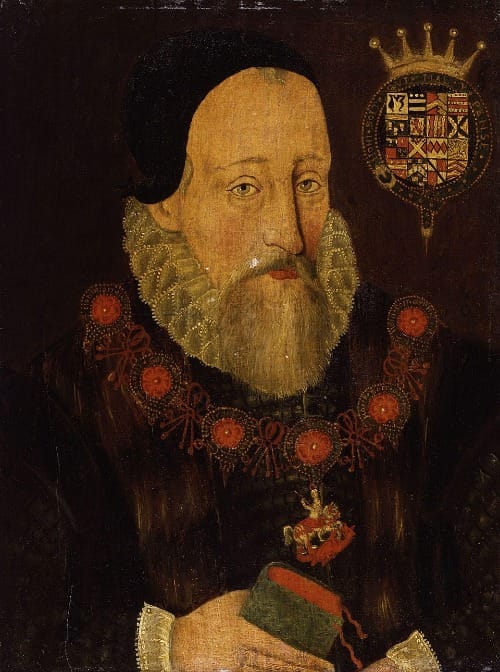
Let's take Queen Elizabeth I, a fairly conventional Great Person. The Anglican Church was her brainchild, a way to establish a common ground between traditionalists and more radical Protestants. But what if Elizabeth I had died of smallpox early in her reign instead of surviving like she did? Her most likely heir at the time is a distant relative, Henry Hastings, Earl of Huntington. In our timeline, Henry Hastings was a devout Puritan. So, in this world, the new King Henry IX as soon as possible reforms the Anglican Church to make it a more conventionally Protestant institution. When Henry IX dies in 1595, the throne doesn't pass to King James VI of Scotland like in our history, but instead to Henry's brother George, so England and Scotland do not unify yet, if ever. More to the point, the Puritans have no reason to leave for North America, changing the course of American—and world—history...
Here's another hypothetical. What if someone other than Hernán Cortés made contact with the Aztecs? At one point in Why The West Rules—For Now, Morris imagines Zheng He reaching the Aztec capital of Tenochtitlan, and it turning into a violent clash that ends with the devastation of Tenochtitlan. I'm no expert in Chinese history, but I think it's more likely in that scenario that Zheng He would have been satisfied with getting Moctezuma to make a show of paying tribute the Aztecs wouldn't have fully understood anyway.
Even if it was someone closer to home, things could have gone very differently. When the Portuguese explorer Diogo Cão reached an unfamiliar land, the Kingdom of Kongo, it didn't end with the capital burning and the king being abducted and killed, but with the establishment of more or less normal diplomatic and trade relations and cultural exchanges (just never mind the fact that one of Cão's first acts was kidnapping a group of Congolese notables and sending them to Portugal). Now, I'll admit there are key differences that, even in an alternate timeline, might have steered the course of American history in the same general direction, like the fact that the Portuguese didn't see anything like the sight of Aztec priests with painted faces and sacrificial daggers, and the King of Kongo apparently enthusiastically converted to Christianity with unusual speed. Even so, what if instead of Hernán Cortés, a man out for gold and glory and acting in defiance of orders, it was someone who was less ambitious and more obedient to his superiors? Going back even further, what if it were someone other than Christopher Columbus who made the first contact with Americans? Could the initial template for American-European relations have been less catastrophically destructive?
Of course, this doesn't even get into the people that might have changed history but didn't get that chance. Imagine that someone, some Scandinavian leader or explorer or some other kind of innovator who convinces enough people to listen, managed to reform the outpost of Greenland and get enough extra settlers there for the settlement to survive even the Little Ice Age. Or before that this leader managed to establish permanent and relatively large settlements in Newfoundland, whose inhabitants would, following Native American trade routes and hunting grounds for fur, move as far west as Quebec, Prince Edward Island, and even Maine. The Greenlanders introduce European pathogens to the natives they trade and intermarry with, and they prove as devastating to native people as in our world. But because these diseases weren't introduced through the more densely populated Mesoamerica, the plagues move more slowly and native societies are more able to adapt. Because there doesn't seem to be any gold or spices in this strange land Europeans assume to be the long-lost land of Thule, just fish and furs, there isn't nearly as much of a push to take the land for their own nor as much interest in settlement. However, in our timeline, the great explorer who found the land of Thule died of a childhood illness or an unlikely accident at sea.
I'll stop there before I let my thought exercises reach the 100-page mark. The point is that questions like how the West took over the world in the nineteenth century may be worth asking, but it's futile to look toward a tidy explanation, even if it's arrived at with cutting-edge data. Maybe, much like how I think Ian Morris viewed history as a technocrat, my own vision of history is that of a romantic or perhaps just a writer. Still, maybe if history is moved not by one vast force but by a hundred smaller things meeting in chaotic convergence, we can be assured that the odds aren't bad that our own tiny actions could be the proverbial butterfly wings, helping to stop prevent anything as calamitous as colonial exploitation from happening again.