Truths Versus Facts: A Meditation on Historical Accuracy and Film

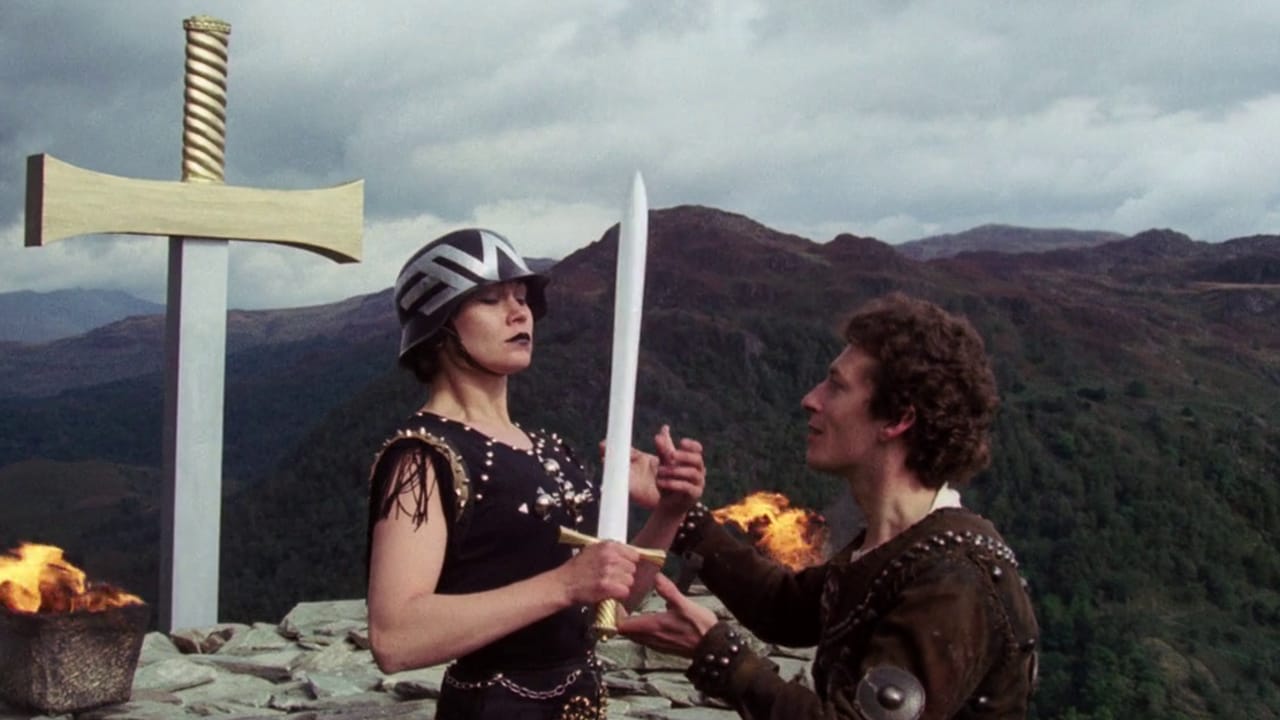
I feel safe in making this extravagant claim with no proof: every historian or history buff who criticizes a historical film has at least once in their lives been accused of treating a fictional movie like a documentary. Sure, in the 138-or-so years of film history I'm sure someone rejected an excellent film because the buttons on a soldier's uniform were the wrong shade of white, or because an actor is five years older than the historical persona they portray. Worse, in our days of Endless Culture War, frivolous accusations of historical inaccuracy have been weaponized, like when a video game dared to depict a historically documented black African samurai or when any work of fiction shows a non-white person in Roman or medieval Britain even in passing.
Still, I think us lovers and students of history are unfairly maligned for our opinions on film. I can only speak for myself, but I believe when a historian maligns a movie (or a novel or a comic or a video game, for that matter) for historical inaccuracy, it's often more nuanced than simply "this movie misrepresents the historical consensus." While watching Nick Hodges' excellent takedown of the 2025 Napoleon film, I had to wonder what exactly that means, though. I arrived at the idea that it all boils down to a distinction between "fact" and "truth."
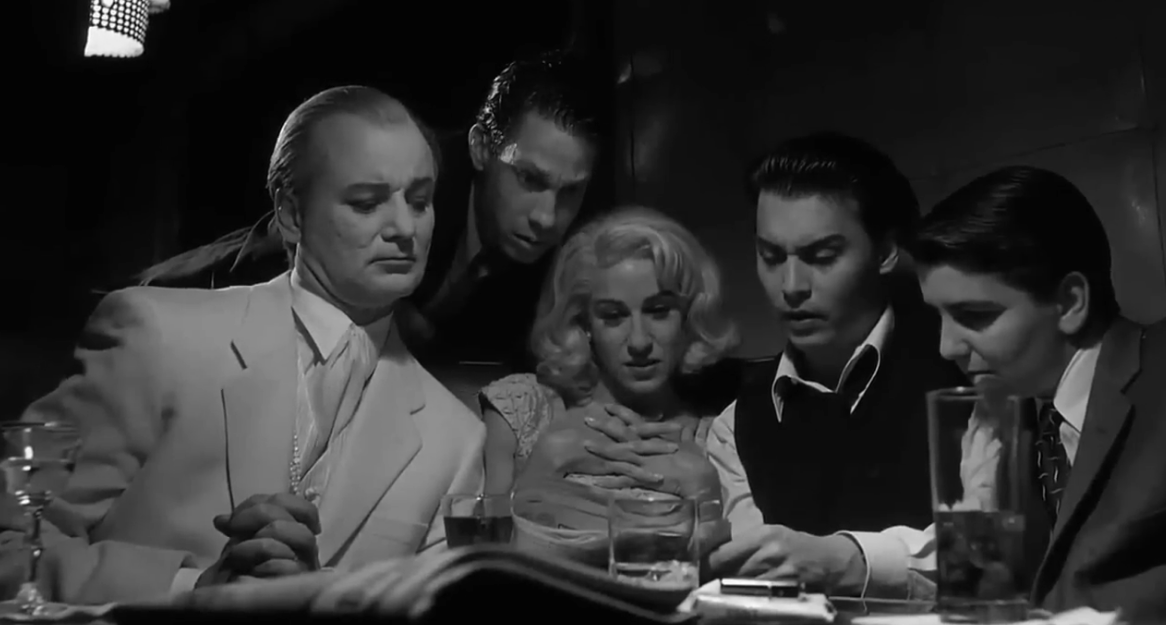
To get an idea of what I mean, let's take a look at one of my personal favorite films, Ed Wood from 1994.
Beyond the compressed timeline and having to combine or speed over certain real-life figures and events, things that I admit are necessary for many if not most historical films, Ed Wood is not terribly accurate except in broad strokes. It completely bypasses Ed Wood's spiral into alcoholism and desperate poverty while arguably downplaying the more grifter-esque aspects of his career. You could even argue that the film's idealized portrayal of Wood and his career is that most dreaded allegation against biographical movies, "hagiographic", but personally I think that's too unkind.
While the facts the movie presents don't always line up with reality, Ed Wood still shines with authenticity. How is that? This is where "truths" come in. The film is so well-written and crafted that it invokes Ed Wood's sincere passion for the pulp films and comics of his youth without spelling it out in dialogue. Further, it captures something of Wood's sincere and naive ambition in such a way that any struggling, frustrated creative can watch the movie and feel themselves connecting with the (in)famous b-movie director across time. Not only that, but it lets itself be informed by what Ed Wood means in terms of his cultural impact. It wasn't until the 1980s following film critic Michael Medved's declaration of Plan 9 From Outer Space as the worst film ever made that Ed Wood became a pop culture figure. Yet, in telling the story of Ed Wood's life the movie draws on that distant future, when Ed's name would finally bask in the fame he never had in life, to give viewers an emotional understanding of why Wood's movies have that appeal despite their many shortcomings and why his work has been especially embraced by outsiders of many kinds.
One of Ed Wood's most famous scenes is when the worst director ever meets Orson Welles, the greatest director ever, in a bar. This (almost certainly) never happened, and, to make the kind of pedantic point I've been accused of making in the past, it's really unlikely that even in Los Angeles any man at the time would have been able to walk into almost any public place wearing a woman's Angora sweater and a wig without getting into a lot of trouble. The scene is pure artistic license at its most egregious. And yet, this one fictional moment presents more of a truth about not just Ed Wood's life and career, but the creative process and the painful work of bringing a vision to life especially when dealing with critics and gatekeepers, than any Wikipedia article or barebones biography ever could. When Orson Welles asks Ed, "Why spend your life making someone else's dreams?" as triumphant music swells, this carries a truth that holds meaning for Ed Wood's life, how his creations eventually influenced pop culture, what he means to the people who appreciate his films, and even the shared experience of all kinds of Ed Woods and Orson Welleses across media and art.
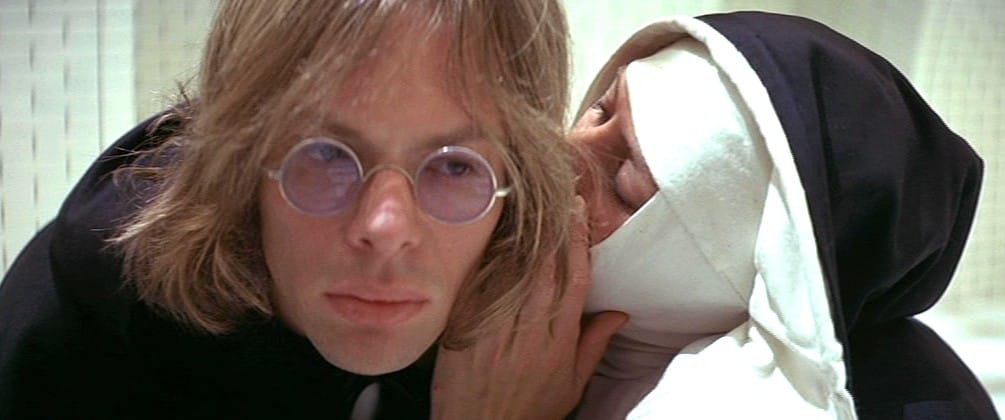
Here's another case study: the director Ken Russell. He not only understood this distinction between fact and truth, he rode all the way with that knowledge on a giant phallus-sized rocket. On one level, his most famous movie The Devils is so historically inaccurate it makes 300 look like a BBC documentary. No, 17th century French cities were not full of minimalist architecture; no, King Louis XIII did not engage in lavish and semi-nude dance productions (that was Louis XIV, and even then I don't think Louis XIV ever danced nearly naked) nor did he like to relax by shooting Huguenots forced into bird costumes; and no, witch hunters did not dress like glam rock stars.
So why don't people bash The Devils for its inaccuracies like they do Braveheart, The Last Samurai, or pretty much any given Ridley Scott movie?
I really do believe that most viewers, even ones who have never read a single paragraph of in-depth film criticism, intuitively understand what Ken Russell is all about. He uses surreal visuals and even deliberate anachronisms to get at those transcendent truths that help audiences understand the historical reality behind the film and relate that to their own experiences and contemporary issues. The Devils sees period accuracy get completely shattered, but only so Russell could express in his own way truths about why religion and politics shouldn't mix and about how people in power cynically exploit moral panics for their own self-serving agendas.
Could a more period-accurate take on The Devils have explored the same truths? No doubt. Still, it would have been a very different film, and it wouldn't have been a Ken Russell film. He doesn't use deliberate anachronisms and the like because he expects his audience won't understand the history and what it means. Rather, he uses them just because that's the visual language he naturally speaks and that's how he artistically communicates with his audience, and I respect that.
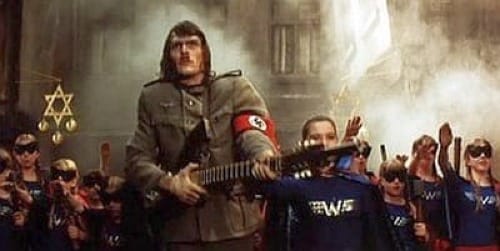
Frankly, Ken Russell goes so far with his visuals it's impossible to take him to task for historical inaccuracies without sounding like the worst possible pedant. Consider Russell's eponymous biographical movie about Mahler. Obviously, Cosima Wagner never dressed up in Nazi-esque regalia with Mahler as a medieval knight in a silent movie montage. Nor do I think Lisztomania is all that accurate when it depicts Franz Liszt and his daughter, wife, and past lovers flying a spaceship from Heaven and channeling the power of music through it to destroy a Wagner-Hitler hybrid Frankenstein monster on a rampage in the Jewish quarter of Berlin. (Yes, this is an accurate description of the film's finale, and people still wonder why I often claim Ken Russell is my favorite director).
As a negative example, there's Ridley Scott's Napoleon from 2025. The aforementioned video essay by Nick Hodges makes the case that Ridley Scott genuinely dislikes Napoleon and can only see him as a "mass murderer" and a French stereotype. Other possible truths about Napoleon, besides the fact that his campaigns of conquest ended and ruined thousands of lives, go completely ignored, like Napoleon's undeniable role as a major architect of modernity or how charisma can help someone rise through the ranks and change the world. It's not just that Ridley Scott's Napoleon is biased and inaccurate; it's that it lies about Napoleon or at best is not interested in more than one possible negative truth.
Of course, none of this is a scientific how-to checklist for evaluating historical cinema. I despise Braveheart and I would argue until my throat is raw that beyond its garish inaccuracies (i.e., the Battle of Stirling Bridge doesn't even take place on a bridge; William Wallace wasn't even called Braveheart) the film carries no truth of value beyond Mel Gibson's own hatred of gay men and the English. A lot of people, even many Scots, would disagree over my second point (while appreciating Gibson's anti-Anglo animus, perhaps), finding that its message of fighting for freedom, dignity, and self-determination against the odds resonates. Others might think I'm being far too generous in my assessment of how Ken Russell approaches the historical lives of the composers he made films about. Plus, there's still the question of whether or not a historical film can be so distractingly and lavishly inaccurate that it spoils any truths it might be carrying. That might describe my attitude toward Braveheart, actually.
If you take away anything from this essay, I hope it's this: be kind to your history geek friends. If you think they're just being pedantic when they criticize a movie you like, stop and think if they're responding to only the movie's facts or if they instead have a problem with how the film handles truths.