Gender-Bending Shamans, or Human Civilization and The Magic Queerness in It All

Anyone who knew me in grad school would know that one of the easiest ways to wind me up was to mention the theory that homosexuality was only perceived as an act and never an identity before the 19th century. On reflection, it wasn't just the fact that I was sure that the theory was factually, demonstrably wrong or even that it disturbed my sense of how best promote gay and trans rights that angered me so much. Most of all, it just encouraged scholars to ask the wrong questions, or at least the uninteresting questions. The issue of where the modern Western concept of "homosexuality" came from always struck me as infinitely less useful and interesting than questions of how people with exclusive romantic and sexual desires for their own gender navigated different cultures and societies throughout history.
One topic in particular has always intrigued me: the connection between spirituality and magic and queerness. I'm sure by writing down my thoughts on this subject I'm opening myself up to accusations of "essentialism" by those of a certain theoretical bent. That said, though, I feel like there is something worth contemplating here. As for essentialism, I think it is always good to be on guard against collapsing social and cultural differences into a bland and convenient singularity, but there's also a danger in going too far and rejecting all parallels and possible connections, especially in history. So with all that out of the way...
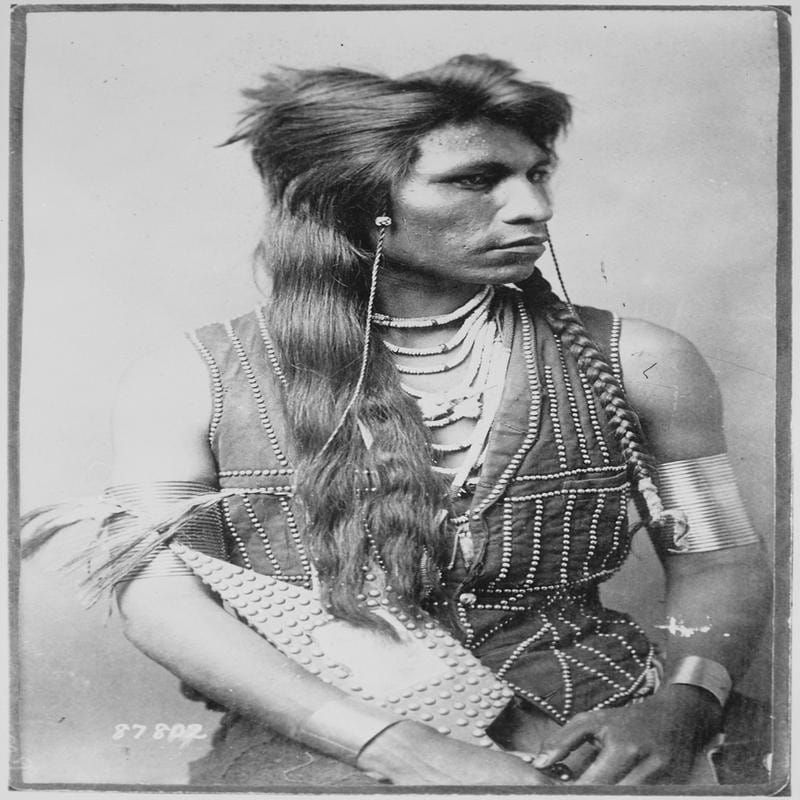
I've always been intrigued by accounts of shamans and priests who take on the dress and even the roles of the other gender or both genders. There's the hijra of South India, who are traditionally perceived as a "third gender." They have their own special religious teachings and traditions and are seen as having a unique power to curse or bless. The Lugbara of West Africa have the okule ("like-women") and the agule ("like-men") who are thought to have a greater sensitivity toward the spirit world. Of course, much has been written about the concept of the "woman-man" or the "two-spirit" concept that exists among some Native American groups, like the winkte of the Sioux. An idea shared across cultures seems to be that having traits and desires that extend to encompass both the worlds of women and men also brings with it an instinctive knowledge of other, spiritual worlds.
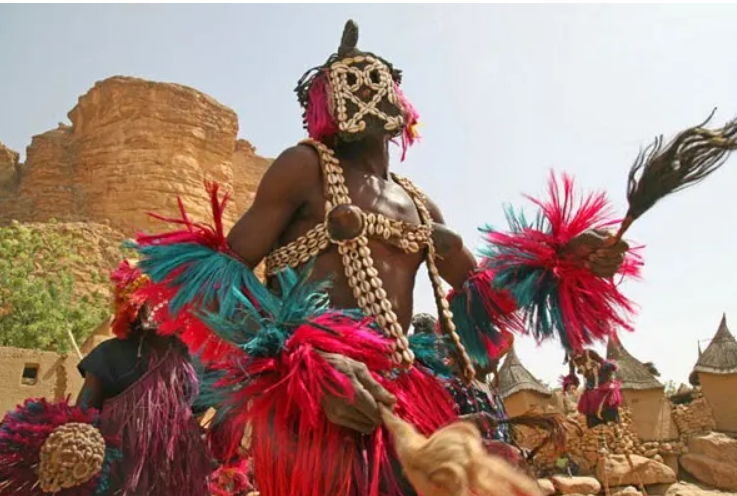
There are caveats, of course. Where these groups still exist, they also often face stigmas. Also, the topic of how same-sex sexual and romantic desire map onto these gender roles, if at all, is an extremely tangled topic that defies any broad conclusions and definitely isn't something I'm qualified to begin to tackle here. Lastly, the rise of neo-pagan and indigenous religious and cultural movements have seen people reconstruct or recontextualize past beliefs and myths in ways that fit their own queer identities or at least their support for modern LGBTQ rights. All that said, I think there is a tangible thread here, one that becomes even more visible when one looks at the distant past.
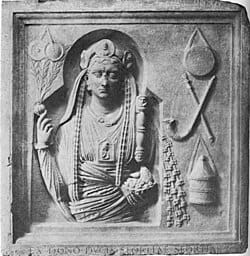
For example, among the Scythians there were the enaree, who were assigned male at birth but adopted the role of priestesses later in life, performing important religious rituals and holding the gift of prophecy. The ancient Mediterranean had the galli priests. These were priests, many of them self-made eunuchs that dressed in women's clothing, who were devotees of the goddess Cybele, whose worship stretched back to prehistory, but they were still around long enough to scandalize Saint Augustine. They may have been related in some way to the gala priests of the Mesopotamian goddesses Inanna and Ishtar. Some were women while those who were men cross-dressed and were, in the surviving sources, associated with homosexual sex. In fact, some surviving religious hymns proclaimed that the goddess Inanna/Ishtar had the power to turn men into women and women into men.
Even far to the north in Scandinavia, there were strikingly similar dynamics. The god Loki was associated with magic and, in several myths, changed his gender, getting pregnant and giving birth. Even the king of the gods, Odin, is said to have been mocked as effeminate by his fellow gods for his own experiments with magic and fortune-telling (thank you to my good friend Scott Ashlin for pointing this out). Archeological and textual evidence is relatively sparse and up for debate, but there is some basis for thinking that, like Odin, there were men who practiced seiðr, the art of magic and divination, but they were perceived as defying the norms of their gender for doing so.
There are also some more subtle hints. In ancient Greek astrology, the planet Saturn was associated with a number of traits, including the art of prophecy, melancholy, heightened religious sensitivities, and being a "hater of women" or a "hater of men"—in today's terms, gay. When I first learned about this in my research, I assumed, like I suspect many people have, that this was an assortment of traits that were random or perhaps, at most, connected to a particular "type" in the psychological sense. Now, though, I can't help but cautiously propose that this could be a case of some ancient cultural association, diluted down but still leaving traces in the thoughts and assumptions of the educated and among the tropes of their literature and myths.
If this is a deeply rooted and, dare I say, universal aspect of human cultures, then what has happened to it over time as societies and cultures and religions changed? While doing research, not surprisingly I came across a far-right Christian screed that pointed out a few of the things I did here, only with the conclusion that queerness is a symptom of evil heathenism. Instead, I don't think this tendency went away, even in the Christian West. After all, for centuries, the Christian world believed that one special group were imbued with spiritual sensitivities: monks and nuns. Granted, they were also associated with homosexuality; a very old allegation, if the number of early rules for monastics that tried to forbid erotic intimacy between them is any indication. That aside, though, celibacy also made nuns and monks transcend the proper, timeless roles of everyday life. This sanctity would eventually extended to priests in Catholic Europe. Appropriately enough for clerics who were believed to miraculously change bread and wine into the flesh and blood of Jesus Christ, they too needed the mystique that celibacy granted them. Perhaps it was not a coincidence that, once the Reformation emerged, clergy had to forsake both celibacy and any claims to supernatural power.
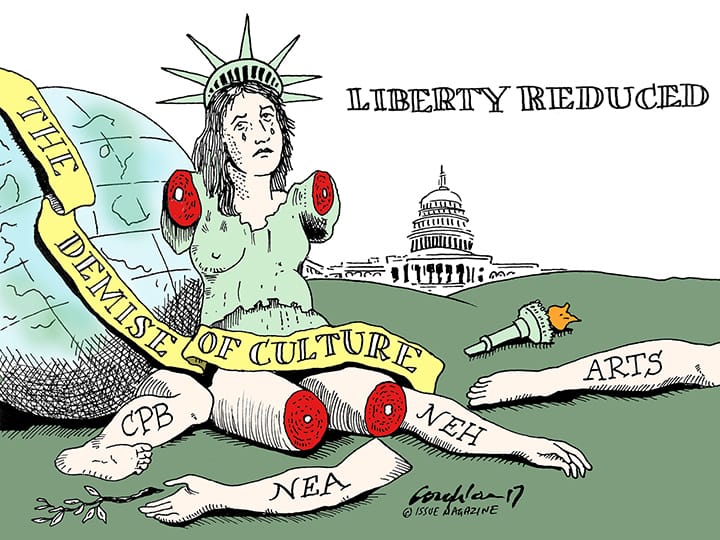
It is a train of thought that brings me to Western modernity. When the spread of Protestantism and later of the Enlightenment-era doctrine of economic "rationalism" led to the dramatic reduction of the number of monasteries, legitimate spaces for the "queer", broadly defined, were narrowed down to near-nonexistence. That trend would only continue with the evolution of capitalism. As much as personal freedom has expanded in the contemporary capitalist West (the continuing efforts of some powerful opponents notwithstanding), I'd even go so far as to say that the ongoing assault by neoliberal austerity upon the university and the arts, places which provided a refuge from the demands of the wage economy as much as monasteries once provided a refuge from the demands of medieval society, constitutes another stage in the war between modernity and queer spaces. There is much left to be said about the ways social, cultural, and spiritual queerness also connect to a kind of economic queerness.
It's here where the cries of "essentialism" would probably get loudest. Even then, I think there is a pattern that appears again and again in the record, once you know where to look. Maybe it's a recurring impulse that existed even before our ancestors started migrating out of Africa and became so deeply rooted it survived into the many different cultures that evolved since; or maybe there is just something inherent to the human experience that perceives something profound (or dangerous) in the individuals that seek to transcend social roles. Whatever its cause and origin, it's there.
Anyway, this was more of a thought exercise than anything else. I offer no citations of any scholarship outside my own ponderings nor do I offer any profound archeological or historical claims in this piece (unless you think I did, in which case, that was my intention all along). That said, I do absolutely believe I am onto something, and it does vindicate something I've long believed. If society doesn't strive to provide a space and a fulfilling role for as many people as possible, then what the hell is the point?