"A Crooked World" and the Childishness of Fascism

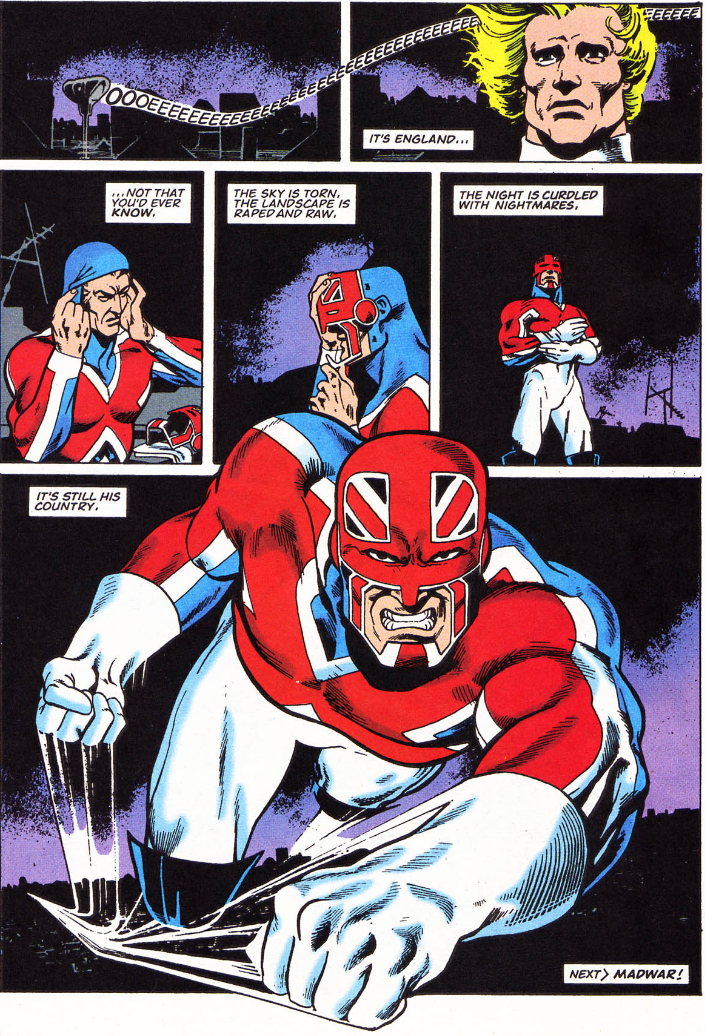
I wasn’t going to write anything for July 4 this year. My mood for writing something at all on the subject has been dampened by a heat wave spawned by the ecological crisis my current government is aggressively ignoring. However, inspiration always stops by unannounced at unexpected times. I just so happened to be revisiting the work of one of my favorite artists, Alan Davis, who has been a prolific artist in mainstream superhero comics for a number of years. Among the works of his I’ve been looking at has been Captain Britain: Crooked World, which also happens to be one of the more obscure writings by comic book/graphic novel wizard Alan Moore.
Moore and Davis’ run on Captain Britain usually doesn’t get brought up when discussing Moore’s more famous work in the era, like the superhero deconstruction to end all superhero deconstructions, Watchmen. Yet, Moore’s work here is arguably also a deconstruction, albeit a less overt one. The hero Captain Britain has most of the hallmarks of a modern-day superhero and is genuinely a good man who will stop to do things like try to bring a moment of joy and hope to the life of a child trapped in a life of poverty and violence. But he is also impulsive, prone to punch first and ask questions later, lets his emotions overwhelm him, can be reduced to a wreck by overwhelming adversity, and, over the course of A Crooked World, even fails completely to stop a threat and save a group of people he befriended and helped, his own sidekick, and even an entire universe.
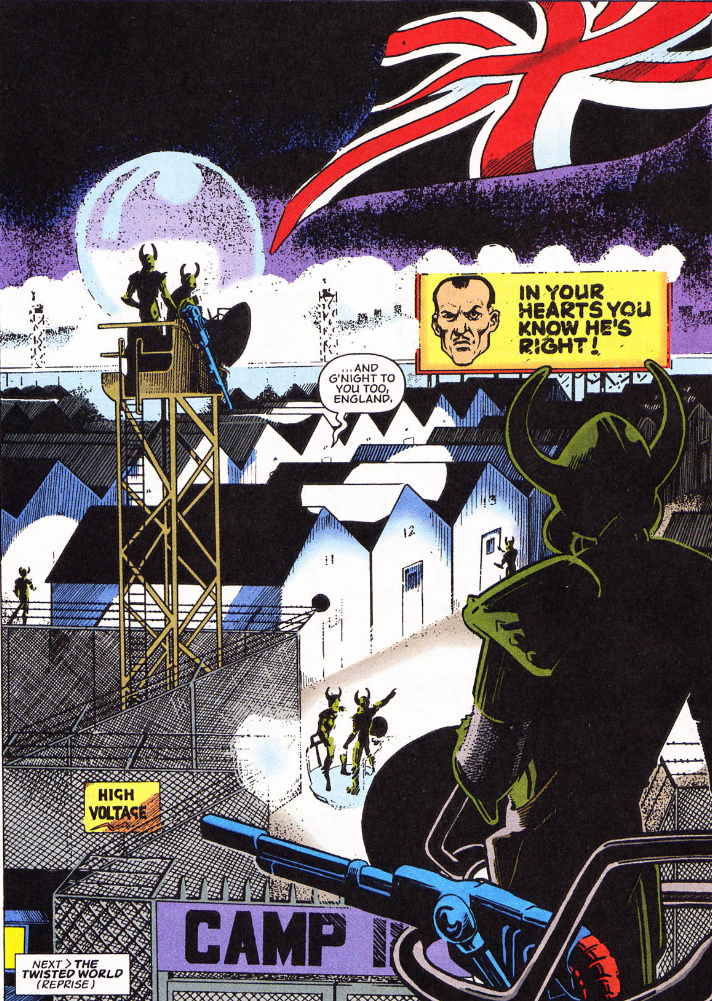
Being an ongoing superhero saga, there are multiple plot threads being spun, but the overall arc has Captain Britain plunked down in an impoverished and crime-ridden parallel universe Britain, one where a fascist government has had all the superheroes killed. This is all the handiwork of one man, Jim Jaspers, who became a member of Parliament and prime minister on an explicit campaign of ridding Britain of all superpowered individuals. Unfortunately for everyone but Jim, he had a secret motive, beyond even just making himself the head of a brutal regime. Jim Jaspers was born with superpowers too, specifically the power of not just a god, but God, and he wanted to eliminate any potential threat as his power grew and developed. Now that he had achieved that goal and his powers have fully evolved, it’s time to play.
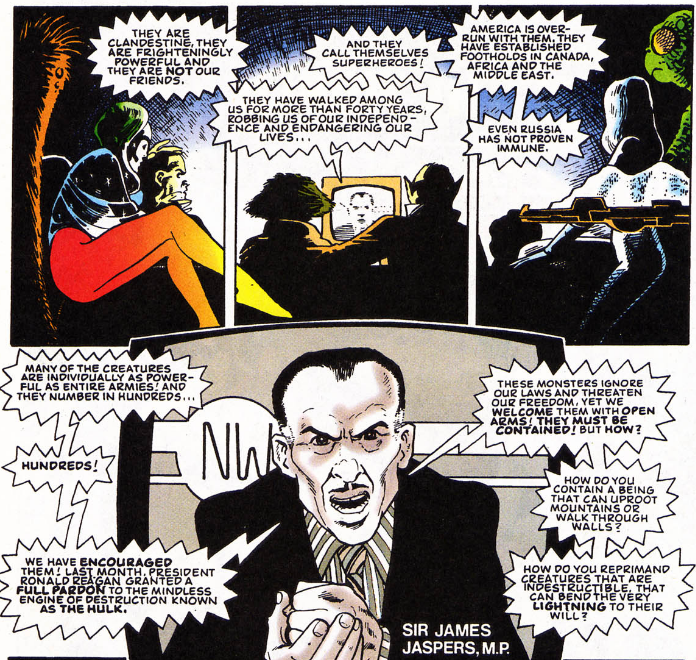
This is where Captain Britain fails. There’s no clever plan, no special weapon or device or newly discovered ally or weakness of the enemy he can rely on to turn the tide. He’s completely at the mercy of both Jim Jaspers and the Fury, a cybernetic organism Jaspers created to help his government kill all the superbeings (think the Terminator only even more unstoppable and looking a bit like the rock monster boss from Mega Man). He is saved, completely outside his own efforts, and brought back to his Earth while the universe he escaped from is casually erased by the disturbingly bureaucratic overseers of the multiverse. Soon enough, though, he learns that his Earth also has a Jim Jaspers, who also gives a speech about the superhuman menace that word-for-word matches a speech his counterpart gave on the other Earth…
The villain with reality-warping powers has become a common superhero trope (partially because of this very story). But I don’t think many if any stories capture just how bizarre yet horrifying such a scenario would be. Screaming bodies burst into flames or pour into the mortar and steel of buildings twisting like tall grass in the wind, time and causality get unmoored, your own body gets remolded like clay as you feel your bones twist and break. What if there was a capital-‘g’, fully interventionist God with absolute control over your life and the world around you…and they were not just malicious, but truly and completely out of their mind?
By this point, you might have picked up on what Crooked World has to do with July 4th from my perspective as an American. To the world Jim Jaspers is an almost typical hard-nosed far-right politician. In the dystopia he creates, his slogan is “IN YOUR HEARTS YOU KNOW HE’S RIGHT!” I’m honestly not sure if it was based on any real-life slogan [I've been informed that it was an actual slogan used in Barry Goldwater's 1964 U.S. presidential campaign], but it does capture something deep and true about fascism: the nihilism over human nature, the disdain for values and rights it views as all shallow and obstructive, the effort to deny democracy yet make the public itself complicit in its own atrocities. What makes Alan Moore’s take on Jim Jaspers downright brilliant is that Jaspers’ fascism is a ruse, or at least it’s not just that. Untethered from responsibility and any need for good or even mediocre public relations, it becomes the tyranny of a child freed from their parents and peers.
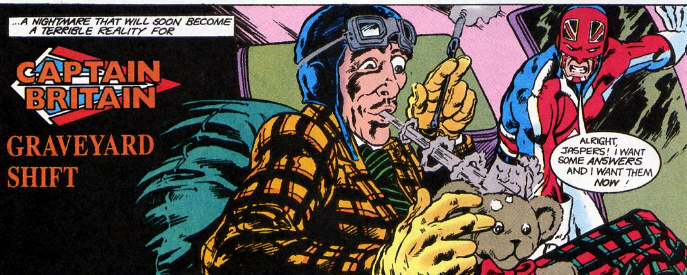
Rather than a suit, when Jaspers becomes God he appears coddling teddy bears, wearing a constantly shifting series of playtime hats (many of which invoke the time period in which Jaspers would have been a child), and even throws a tea party. However, for Jaspers, childlike whimsy is mixed with depravity as seamlessly as eggs and milk in cake batter.
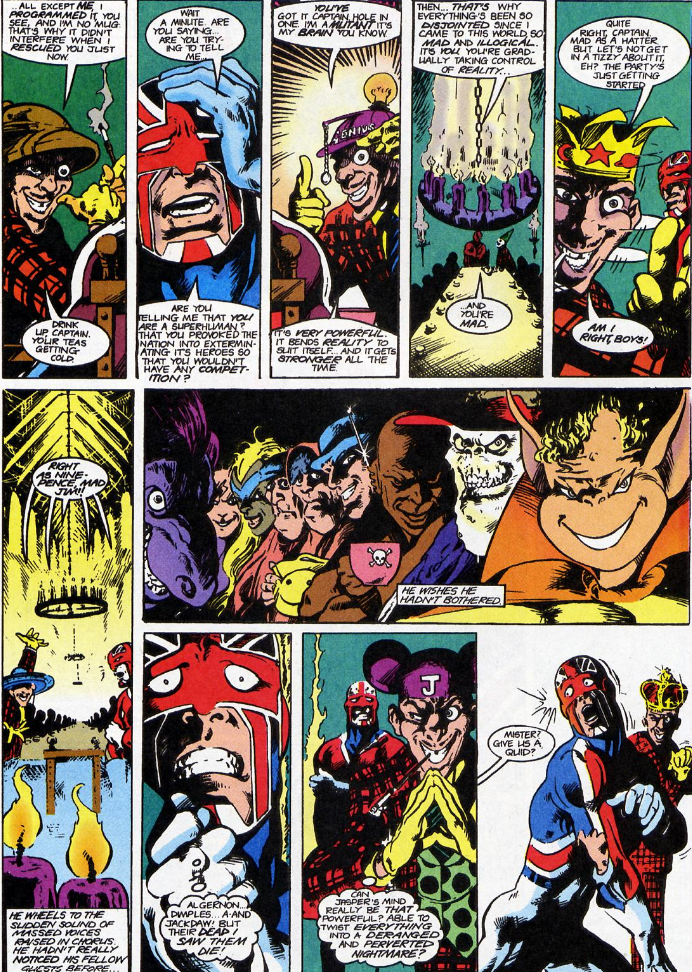
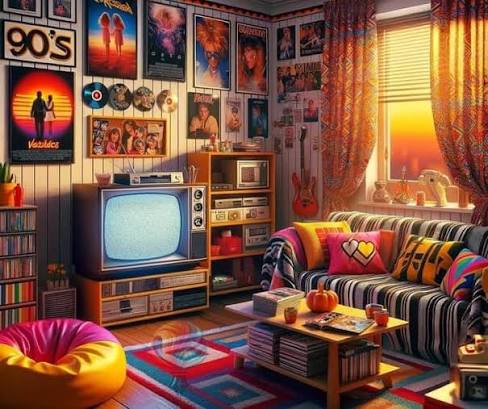
That Alan Moore was tapping into a real undercurrent, and something that’s become more obvious in the years since A Crooked World was first published, is perhaps most expressed in the far-right fad for the pop culture of the past. Plenty of academics and political observers have written about how fascism embraces nostalgia and its aesthetics. I won’t go into all that here, except to remark that, decades before “AI” slop images supposedly recreating scenes from ‘80s and ‘90s childhoods came into being, Alan Moore and Alan Davis were showing a fascist taking the retreat to adolescence to its most grotesque extremes. At points, Jim Jaspers is even wearing a copyright-friendly rendition of the Mickey Mouse hat.
Then, of course, there’s Donald Trump.
At the moment I’m writing this, Trump is turning the 250th anniversary of the founding of my country into a birthday party for himself, declaring he’s going to prove himself the greatest orator in history by giving a long brilliant speech in humid temperatures topping 100 degrees. This comes after tearing down the Rose Garden and the East Wing, two emblematic sites at the White House, announcing that he will construct a massive ballroom and his own spin on the Arc de Triomphe, and months of calling anyone who displeases him things like “nasty” and “dumb person.” He’s even branded the nation’s passports with his own scowling, bullying image. In this, Year Six of the Trump Era (or Year Ten, if you count the Biden years, and maybe we should), “MAGA” stands revealed as not so much a coherent ideology, but as the pretext for a frustrated theater kid forced to be a business guy by his overbearing daddy remaking the world in his own tragicomic, stunted image.
As I grow old(er), one of the things that has surprised me is how some works of art grow more, rather than less, relevant. So it is that a work about a far-right politician becoming a mad god speaks to an era where a man is put in charge of the most powerful country in the world and seeks to impose his own psychosis upon reality.